All Categories
Featured

How Machine Learning Drives Modern Search Rankings
Topical authority refers to a website's know-how and trustworthiness on a specific topic. And constructing it through premium material is an effective method to develop your proficiency and reliability on topics relevant to your service. This helps with making your target audience's trust, improving your online search engine rankings, and perhaps driving more conversions.
Note how the website's topical authority is listed as "High" for the term "dog training."Topical authority differs from domain authority, which determines a site's overall dependability and influence across all subjects.
[target1:anchor_exact1]Strong topical authority improves search efficiency, as Google normally trusts reliable sources and ranks them greater in its search engine results pages (SERPs). Here's a more detailed description of the ways topical authority affects SEO: Topical authority builds self-confidence in your brand for readers and online search engine alike. This results in more returning website visitors and higher SERP rankings.
Topical authority also leads to natural link building. Meta and Statista are good examples of sites with strong authority in their specific niches. Building topical authority can be a sluggish procedure.
Securing Your Search Authority With AI
The best example is when a company outranks a bigger rival due to its authority in a specific specific niche. Google makes every effort to provide the finest possible search experiences.
[target2:anchor_exact1]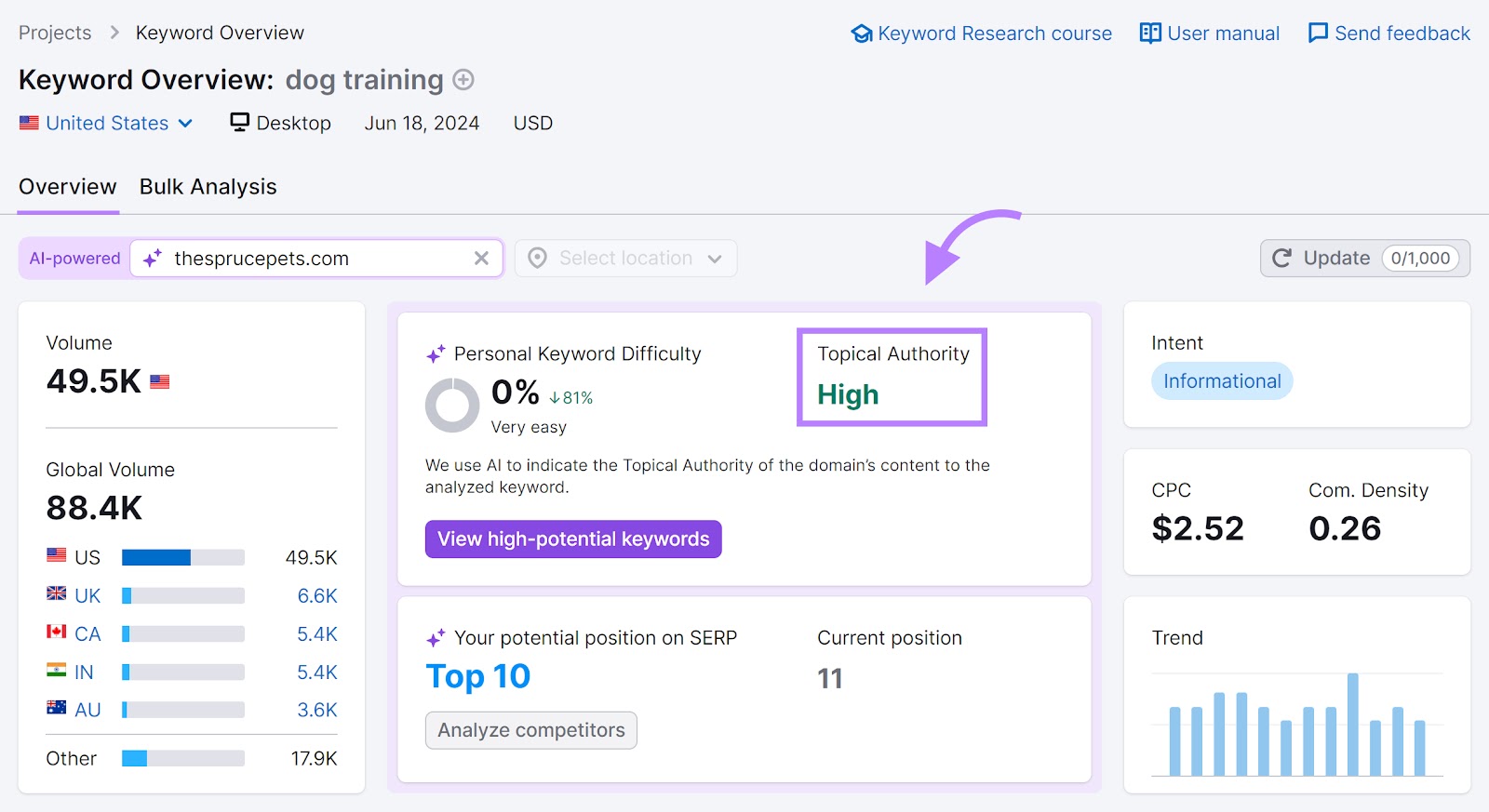
So it prioritizes the most pertinent, helpful, and credible pages when ranking outcomes. And much of Google's algorithm updates and declarations have reaffirmed its choice for trustworthy, experienced, and experienced publishers. Here's a quick timeline of updates pressing topical authority to the leading edge:: The Panda algorithm update aimed to"lower rankings for low-grade sitessites which are low-value include for users, copy material from other sites, or sites that are just not extremely beneficial.": Hummingbird(search engine algorithm rewrite )was the dawn of semantic search.: The Helpful Material Update altered Google's Knowledge, Authoritativeness, Dependability(E-A-T)standards into E-E-A-T adding "Experience."The goal was to reward content developers with firsthand experience in their topics.:Google's second Handy Content Update focused on raising content that's helpful, high-quality, and shows direct experience. The upgrade minimized rankings for websites with thin, replicate, and unhelpful content.: The Practical Content Ranking System was incorporated into Google's Core Ranking System, and several systems began assessing the helpfulness of contentTopical authority in SEO is especially appropriate for news. Google uses a committed to prioritize outcomes from"news groups that are totally knowledgeable about the location and subject."Here are 4 basic ideas to begin constructing topical authority for your brand and website. It's much more time -and cost-efficient than setting your sights on a broad, extremely competitive field. For example, you might aim to become a trusted voice on knitting patterns instead of knitting more broadly. It'll be simpler to produce truly initial, high-value content. The fastest method to build groups of closely associated content ideas is to utilize Semrush's AI-powered Keyword Method Contractor. Start by getting in a couple of seed keywords (broad terms that belong to your organization)into the tool, choose your target location, and click". "The tool will then offerconcepts for pillar pages (main pages that cover a broad subject )and subpages(pages that explore among the pillar pages' subtopics in higher detail ). Scroll down to"Pages Particulars." Pillar pages are listed most plainly in the table. And its pertinent subpages are noted below. Like this: Here, you can see that "crochet animals,""cute things to crochet," and"little crochet tasks"might all appropriate subtopics for the bigger pillar page. Click on the arrow to the left of any pillar page or subpage to broaden the row. Which will give you recommendations for how to produce a high-quality, helpful piece of content. The more pertinent, high-quality, search-friendly content you develop, the more topical authority you can build. You'll needplenty of data-backed content ideas to expand upon your initial topics.Keyword research tools can assist you discover even more relevant search terms to target with your SEO and content marketing efforts. Here's how it works utilizing Semrush Keyword Magic Tool: Go into a broad subject related to your service, add your domain to utilize our AI-powered feature, pick your target location, and struck"."The tool will note all the keyword ideas basedon your picked seed term. The wider your initial term, the more suggestions there'll likely bein this case, there are more than 127,000 keywords. For example, by clicking" socks, "we get a list of topic concepts relating to knitted sock patterns. Keywords with considerable search volumes(the average number of monthly searches)and lower-than-average keyword problem ratings (KD %)are typically great candidates for those just beginning. Keyword trouble approximates how tough it'll be to rank in Google's top 10 for an offered term. Your site's opportunities of success might be less or more depending on your existing topical authority. Which is why Semrush has added an Individual Keyword Problem (PKD%)score. Which helps you find the very best opportunities for your specific website. So, click on the ""filter at the top of the table, select"," and click "."The table will now reveal you the keywords that are most convenient for your site to rank for. Implying that website stands a fantastic chance of ranking near the top if they create a high-quality piece of material about this subject. Send out appropriate terms to Keyword Method Contractor by clicking the ""sign next to a keyword to add it to your present keyword list: Although you can't completely control who connects to your content or mentions your brand, you can bring in quality backlinks utilizing some easy strategies. Outreach involves getting in touch with appropriate sites and asking for links to your site. It's the most straightforward method. For a compelling pitch, explain what makes your proposed piece of material unique and valuable. It could be the only study of its kind in your industry. And be specific. You want those website owners to plainly see the advantage of linking to you. Dead links hinder the user experience(UX), which implies many site owners enjoy to change them. Reconcile your outreach time by only using link replacements when they're ideal fits. This is simple with Backlinks. Because you can use it to find all the domains that link to broken pages on a competitor's website. Frequently, it's even if the writer hasn't thoughtto add one. By reaching out and describing the advantage of connecting to your content, you may convince them to modify it. Use the Media Tracking tool within Semrush's Social Toolkit to get notifications when another site discusses your organization. You can rapidly find these chances. Distinct, original insight is constantly best.
Because it lets you provide something your rivals can't match. Like this case research study: It helps a broad audience of digital marketing firms by providing insight into the tools and tactics they can utilize to increase mobile organic traffic. And nobody else can tell this story. Contrary takes on your industry's hot subjects Interviews with subject experts Frequently asked questions (FAQs)that others fail to respond to Original researchTo guarantee your material resonates with possible consumers, research the concerns they may be asking.AlsoAsked is a simple tool for getting fast ideas. Go into a term or question, choose your region, and struck"."You'll see a tree diagram including questions that Google users who browsed your subject also asked: Click on any of these to explore further follow-up questions and utilize the most appropriate ones to influence your content.: Here are some tools that can help you gauge your site's credibility and know-how in a topic area: Semrush's Topical Authority metric can assist you measure how credibility your website has for particular search terms. Here's how: Believe of a keyword that you want your website to rank for and type it into the text bar. Next, include your domain in the "AI-powered function "bar, select your target location, and click"." There will be a ranking of"Low,"" Moderate, ""Pertinent, "or" High"under the "Topical Authority"label. Getting backlinks shows rely on your site is growing. Track yours using Semrush Backlinks tool. Type your website's URL into the Backlinks tool. Then, hit"."Near the top of the page, you'll see"Referring Domains"( the number of domains that point back to your site)and"Backlinks" (the total number of backlinks indicating your site ). You'll see in red or green whether each figure has increased or decreased. Inspect the report's Authority Score for a basic step of your website's quality, which is partly based upon a variety of backlink-related aspects.

Latest Posts
Developing a Scalable System for Topical Authority

Future-Proofing Your Topical Authority With AI
Mastering Modern Search With ML Systems